When you buy charcoal for a BBQ or a restaurant kitchen, it’s easy to think charcoal is just charcoal — all the same. It isn’t. What you use decides how your cooking goes, how long it lasts, and how much hassle you face.
Let’s look, in plain terms, at exactly where ordinary charcoal and briquette charcoal differ.
What ordinary charcoal is
The loose charcoal most common in the market is made by burning wood directly. The pieces come in all shapes and sizes. It’s cheap, so many people buy it. But a few problems show up in use.
It burns out fast. Ordinary charcoal usually finishes within 1 to 2 hours. You end up adding more coal mid-cook.
It smokes more. The moisture and raw matter in the wood don’t fully burn off, so it smokes while burning — and can leave an off-taste in the food.
Heat isn’t even. Because the pieces aren’t uniform, some spots run hot and others cool, so cooking is uneven.
It crumbles. Move it around and a lot of it turns to dust. That part is wasted.
What briquette charcoal is
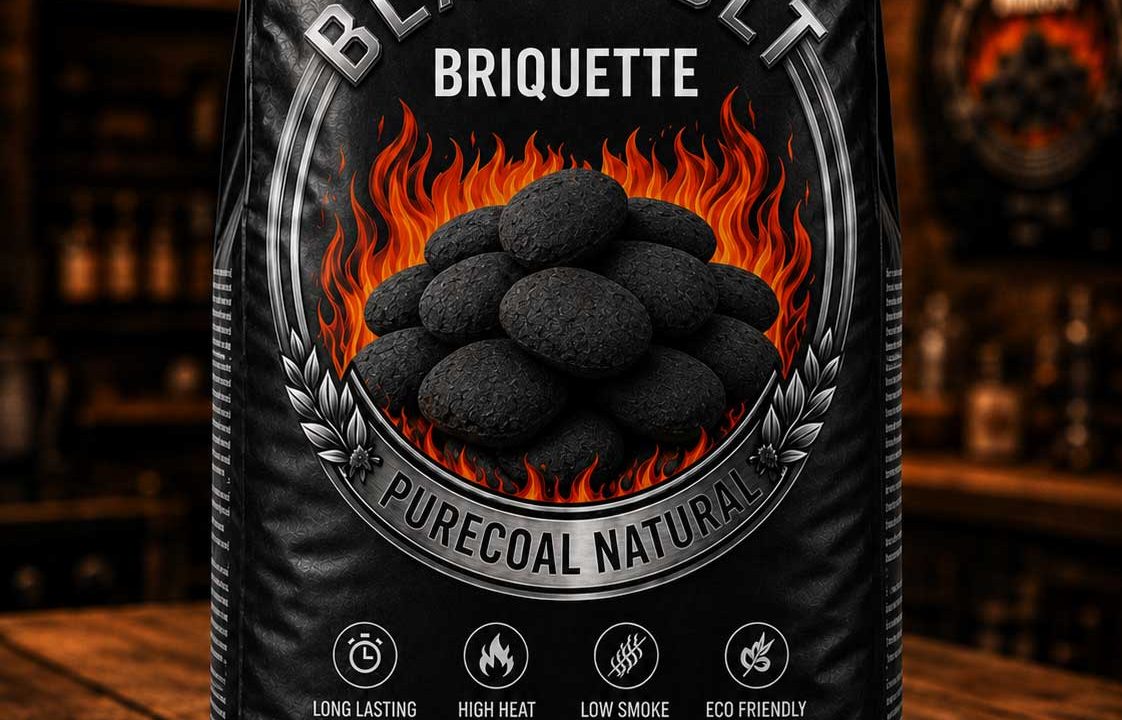
Briquette charcoal is a different kind of fuel. The pieces are dense and uniform, pressed into a set shape, and the smoke-causing matter and moisture are removed before the fuel ever reaches you. What remains is almost pure carbon.
That one difference shows up big in daily use.
It lasts longer. A good briquette holds steady heat for 6 hours or more per load. No constant refilling.
Less smoke. Since the smoke-causing matter is already gone, there’s far less smoke while burning. The kitchen or rooftop doesn’t fill up.
Even heat. All the pieces are the same size, so the fire spreads evenly and heat is easy to control.
Low ash, less waste. A good briquette leaves very little ash, and its dense structure means it doesn’t crumble easily.
So which should you choose
For a short, small cook where you want to spend the least, ordinary charcoal does the job. But if you want the fire to last, less smoke, even cooking and less hassle, briquette charcoal is well ahead — especially for restaurants, catering or large events that need steady, continuous heat.
Put simply, price isn’t only what you pay at purchase. Count how long it lasts and how much is wasted, and briquette charcoal often turns out to be the more economical choice.